Published: Mon - Mar 03, 2025
AI Adoption Hurdles: Data Overload & Privacy Fears


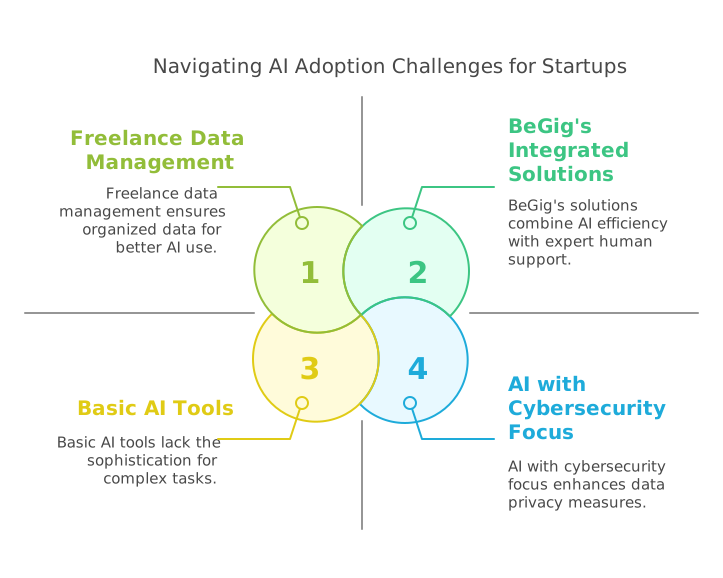
AI Adoption Hurdles: Data Overload & Privacy Fears
If you’re a startup founder, you probably know what it feels like to be overwhelmed. You’re wearing multiple hats, trying to juggle everything from growth strategies to daily operations. And then there’s the data—endless streams of it, coming from all directions. It seems like you have everything you need to make smart decisions, but the reality? You’re buried under a mountain of information.
AI tools might sound like the perfect solution to handle this, right? They promise to help you sort through the chaos and give you actionable insights. But for many founders, the situation isn’t that simple. Data privacy concerns, along with the quality of AI-generated code, make many startup leaders hesitant to dive in headfirst.
Let’s break down why this hesitation exists—and how platforms like BeGig can help bridge the gap.
Drowning in Data: Too Much, Too Fast
As a founder, you’re probably collecting data from multiple sources—customer feedback, website analytics, product usage stats, and financial reports. At first, all this data might seem like a blessing. But when you actually sit down to analyze it, it quickly becomes overwhelming. There’s just too much information, and it’s hard to know where to start.
Here’s where AI tools come into play. In theory, they should help you sift through all that data and extract the most important insights. But AI only works well when fed clean, organized data. Unfortunately, most startups don’t have the luxury of a well-maintained data system. I’ve been there myself—facing incomplete, fragmented datasets, wondering how I’m supposed to make sense of it all.
And let’s not forget the time it takes to prepare your data before AI can even start working. Instead of saving time, it often feels like AI tools just add another layer of complexity. That’s why so many founders hesitate to rely on them fully.
Privacy Concerns: Is Your Data Really Safe?
When it comes to using AI tools, data privacy is one of the biggest hurdles. As a founder, you’re responsible for protecting your customers’ sensitive information, and any misstep can lead to serious consequences—both legally and in terms of reputation. With regulations like GDPR and CCPA, safeguarding data is no longer just a best practice—it’s the law.
Here’s the tricky part: many AI tools require you to input huge amounts of data for them to function. This means you’re handing over sensitive information to third-party systems, and that can feel risky.
- What if there’s a data breach?
- How secure is that AI vendor, really?
I’ve often felt this same hesitation—wondering if using these tools is worth the risk. After all, mishandling data can lead to fines, lawsuits, or worse, a loss of trust from your customers. It’s no surprise that many founders are wary about going all-in with AI, especially when it comes to privacy.
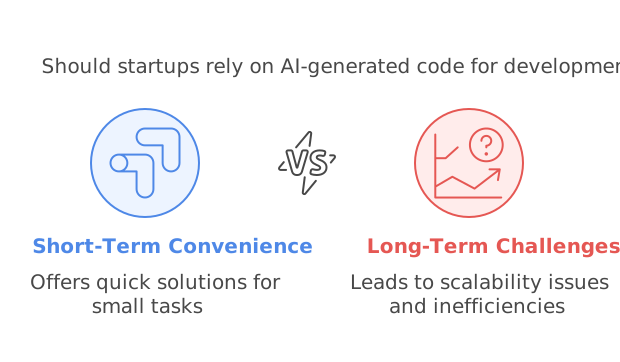
Caption: AI Adoption Hurdles: Data Overload & Privacy Fears
AI-Generated Code: Quick Fix or Future Problem?
Another reason why founders hesitate to embrace AI fully is the quality of AI-generated code. Tools like GPT can quickly generate code to help with development, but the reality is that this code often isn’t optimized for performance.
I’ve used AI-generated code before, and while it can be helpful for smaller tasks, I’ve found it to be problematic for larger, more complex projects. The code might work in the short term, but it’s often clunky and difficult to scale. And as your startup grows, the last thing you want is to spend more time fixing or rewriting code than building your product.
The convenience of AI-generated code can be tempting, but it often leads to more headaches down the road. For a fast-moving startup, those inefficiencies can cost you valuable time, money, and resources
Never miss a story
Stay updated about BeGig news as it happens