Published: Thu - Nov 12, 2026
AI Resume Screening: What Employers Get Wrong and How to Hire Better


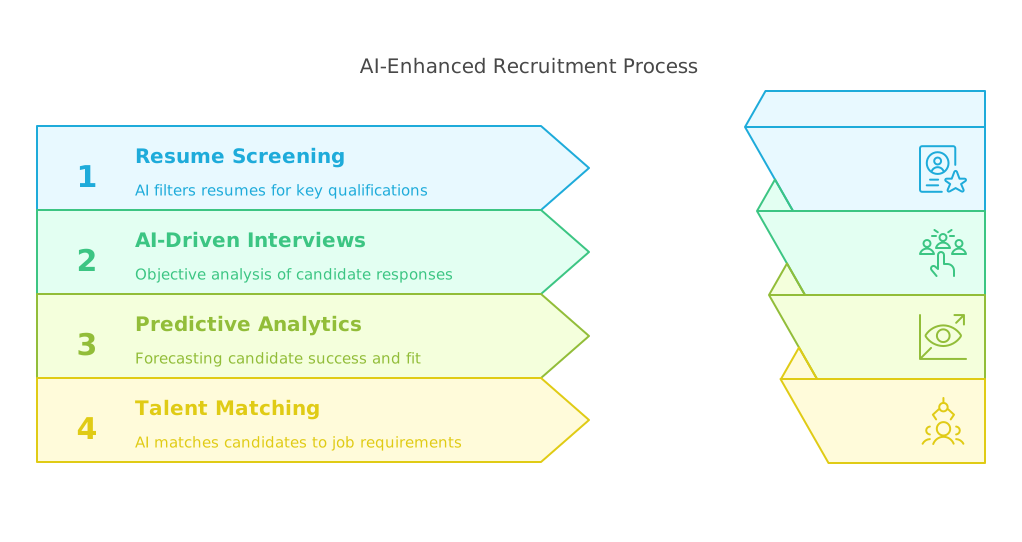
AI resume screening can help recruiting teams manage large applicant pools, but it cannot replace a well-defined role, structured evaluation, or human judgment. The biggest risk is not that AI screens resumes too quickly. It is that employers allow opaque keyword matches, biased historical data, and unexamined rankings to influence who gets an opportunity.
AI is now a core part of talent acquisition. Sixty-nine percent of companies report using AI in some capacity, and screening is the most common use case, adopted by 58% of organizations. Yet only 18% of talent-acquisition teams have a defined approach to AI, and 45% lack a formal AI-governance framework. That gap is where good candidates get missed, biased patterns get repeated, and compliance risk grows.icims+1
This guide explains how AI resume screening works, where it fails, and how employers can use it to improve, rather than automate, hiring decisions.
What Is AI Resume Screening?
AI resume screening is the use of software to review applications, extract information, match candidates against role requirements, and rank or prioritize them for recruiter review. It may use keyword rules, machine-learning models, semantic matching, or a combination of all three.
A typical AI resume-screening workflow looks like this:
- A candidate submits a resume and application.
- The system parses the resume into structured fields, such as skills, job titles, education, employers, locations, and dates.
- The tool compares that information with the job description, recruiter-defined criteria, or historical hiring patterns.
- It assigns a match score, rank, recommendation, or status.
- A recruiter reviews the results and decides whether to advance the candidate.
The important distinction is that screening is not selection. A high score may indicate that a resume contains relevant signals. It does not prove that the candidate can perform the role. A low score should trigger review, not automatic rejection.
How AI Resume Screening Works
Resume parsing
Resume parsing converts unstructured resume text into structured data. It identifies job titles, employers, dates, education, certifications, skills, and other fields so the system can compare candidates consistently.
Parsing is useful, but it is imperfect. Unusual resume formats, non-standard job titles, career changes, and international experience can be misread or omitted. A candidate may be qualified but poorly represented by the parsed version of their resume.
Keyword matching
Traditional ATS screening relies heavily on keywords and filters. Recruiters may filter by skills, education, job title, certifications, experience, or location.
This approach is still widespread. In Jobscan’s survey of 384 recruiters, 99.7% said they use filters in their ATS or a similar system, while 76.4% filter candidates by résumé skills. Other common filters include education at 59.7%, job title at 55.3%, certifications or licenses at 50.6%, years of experience at 44%, and location at 43.4%.jobscan+1
Keyword matching can be useful for non-negotiable requirements. For example, a licensed role may require a specific certification. But it becomes problematic when recruiters treat a missing phrase as proof that a candidate lacks the underlying skill.
Semantic matching
More advanced AI resume-screening tools use language models or embeddings to assess meaning rather than exact keyword overlap. For example, “built customer-facing web applications” may match a requirement for “front-end development experience,” even if the exact phrase does not appear in the resume.
Semantic matching can reduce false negatives caused by wording differences. However, it also introduces a new problem. The model may favor resumes that resemble the language, background, or career path of previously successful candidates, even when those patterns are not job-related.
Scoring and ranking
Many AI recruitment tools produce a match score, percentage, rank, or fit recommendation. These outputs can help recruiters prioritize a large applicant pool.
The risk is that a score can look objective while hiding subjective assumptions. A candidate may receive a low score because of a career gap, an unfamiliar company name, a nontraditional degree, or a resume written in a different style, not because they cannot do the job.
AI Resume Screening and ATS Keyword Matching
AI resume screening and ATS keyword matching are related, but they are not the same thing.
ATS keyword matching identifies exact words, phrases, or filters. It can produce pass or fail results, search results, and ranked lists. Its strength is speed and transparency. Its weakness is that it can miss qualified candidates who use different wording.
AI resume screening can use semantic understanding, machine learning, and ranking models. It may produce match scores, candidate rankings, recommendations, or screening categories. It can identify related skills and reduce exact-keyword misses, but it can also obscure why a candidate was ranked lower.
The practical answer is not “AI instead of ATS.” It is a hybrid process. Use rules for clear, job-related requirements. Use AI to improve recruiter efficiency. Use structured human evaluation for decisions that affect a candidate’s opportunity.
What Employers Get Wrong
Treating keyword matches as competence
A resume is a communication document, not a complete record of someone’s ability. Qualified candidates may describe the same capability differently, especially if they come from another industry, country, or professional background.
For example, a candidate may not use the phrase “stakeholder management,” but may have led cross-functional launches, resolved executive escalations, and managed partner relationships. A keyword-only system may miss them. A recruiter who understands the role should not.
Assuming the ATS automatically rejected someone
A common candidate-side belief is that an ATS rejected a resume because it could not read it. In reality, most systems sort, filter, and prioritize applications rather than automatically reject them.
Jobscan found that 23 of 25 U.S. recruiters said their system does not auto-reject resumes based on formatting or content thresholds. That does not mean ATS screening is harmless. It means employers need to understand what their system actually does before making claims about it.
Training on biased historical data
If a model learns from past hiring decisions, it can learn past preferences as well as past performance. Historical data may encode preferences for particular schools, employers, career paths, employment continuity, or communication styles.
The result is not always obvious discrimination. It can appear as a model that consistently ranks certain resumes higher because they resemble the profiles of people already hired or promoted.
Using proxies instead of job requirements
Common screening signals, such as prestigious universities, well-known employers, continuous employment, long tenure, or a particular job title, can act as proxies for ability. They may correlate with performance in some contexts, but they can also exclude capable candidates.
A better question is: what evidence shows that this person can succeed in the role? That shifts the focus from pedigree to demonstrated skills, relevant outcomes, work samples, and structured interview performance.
Letting AI make final decisions
AI can efficiently narrow a pool, but it should not decide who is eliminated. A ranking system may miss context, such as a career break caused by caregiving, military service, health treatment, education, or contract work.
Employers should require recruiter review for borderline candidates and for any decision that removes someone from consideration. AI should surface candidates for review, not serve as an invisible gatekeeper.
Assuming vendor claims equal validation
A vendor may say its tool is bias-free, fair, or validated. Those claims are not enough. Employers need to understand what data trained or tuned the model, which job criteria the tool evaluates, how scores are calculated, how the vendor tests for adverse impact, when the model changes, and whether the employer can access audit results and documentation.
A tool that performs well on a vendor’s benchmark may still perform poorly for a specific role, company, applicant pool, or jurisdiction.
Ignoring accessibility
Automated screening can disadvantage applicants with disabilities if it penalizes employment gaps, requires formats they cannot access, or fails to provide an alternative path to demonstrate qualifications.
Under the ADA, reasonable accommodation includes changes that enable a qualified applicant to participate in the application process. Examples include accessible formats, readers or sign-language interpreters, accessible testing locations, modified equipment, and other adjustments.ada+2
Applicants may request accommodation orally or in writing, and someone else may make the request on their behalf. Employers should make that process visible before candidates apply, not only after a rejection.eeoc
The Bias Problem in AI Hiring
AI does not create bias from nothing. It can amplify bias already present in job descriptions, past hiring decisions, recruiter behavior, and the language used to describe successful employees.
Research from the University of Washington examined AI-assisted resume screening across more than 550 real-world resumes, varying names associated with perceived race and gender. The researchers found that language-model retrieval systems favored White-associated names in 85.1% of comparisons and female-associated names in only 11.1%.
The study also found that Black-associated names led in just 8.6% of comparisons, and resumes with Black- and White-associated names were selected at equal rates in only 6.3% of tests. In the remaining comparisons, men’s names were favored 51.9% of the time, compared with 11.1% for women’s names.
These findings do not prove that every AI screening product is biased. They do show why employers cannot treat “AI-powered” as synonymous with “objective.”
How proxy bias enters the process
Bias can enter through several routes:
- Job descriptions can use gendered, exclusionary, or unnecessarily narrow language that shapes what the system considers a good match.
- Historical hiring data can teach the model to favor people from certain schools, employers, or demographic groups.
- Proxy variables, such as school rank, employer brand, employment gaps, tenure, and job titles, can correlate with protected characteristics.
- Semantic similarity can favor resumes that resemble existing employees rather than candidates who can perform the work.
- Threshold design can turn a small difference in ranking into a major difference in opportunity.
The solution is not to remove all filters. It is to ensure that every filter has a defensible connection to the job.
How to Audit AI Resume Screening Tools
An audit should begin before deployment and continue after the tool is live. The goal is not merely to check whether the tool is biased. It is to determine whether it improves hiring quality without creating unjustified barriers.
Start with a role scorecard
Before configuring the tool, define the essential functions of the role, must-have qualifications, preferred but nonessential experience, evidence that demonstrates each requirement, skills that can be learned on the job, and criteria that should never influence screening.
For example, five years of experience may be reasonable for a senior role, but only if the employer can explain why that level of experience is necessary. A degree from a top-tier university is harder to defend unless it is genuinely job-related and consistently applied.
Run a controlled pilot
Test the tool on a defined sample of applications before using it for live hiring decisions. Compare its rankings with recruiter judgments, then investigate disagreements in both directions.
Ask these questions:
- Which strong candidates did the tool rank poorly?
- Which weak candidates did it rank highly?
- Did the tool reward keyword stuffing rather than relevant experience?
- Did it penalize career gaps or nontraditional backgrounds?
- Did recruiters override the system, and why?
Measure adverse impact
Under NYC Local Law 144, a covered automated employment decision tool must undergo a bias audit before use. The audit must calculate selection or scoring rates and impact ratios across sex, race or ethnicity, and intersectional categories.
The city defines a selection rate as the rate at which individuals in a category move forward in the hiring process or receive a classification from the tool. An impact ratio compares that rate with the rate for the most-selected category.
Employers should calculate these metrics before deployment, during the pilot, and on an ongoing basis. A disparity does not automatically prove unlawful discrimination, but it is a signal that requires investigation and mitigation.
Review false negatives
A high-accuracy score is not enough if it consistently misses strong candidates. Review a sample of rejected or low-ranked applicants, especially those who later succeed in interviews, assessments, or other roles.
False negatives are expensive. They reduce talent access, weaken diversity, and can cause the company to hire a less-qualified candidate simply because their resume matched the expected format.
Preserve human oversight
Create explicit rules for when a recruiter must review a candidate:
- Every candidate near the screening threshold
- Every candidate with an employment gap, career change, or nontraditional background
- A random sample of rejected candidates
- Every candidate who requests an accommodation
- Any candidate whose score conflicts with recruiter judgment
Document the decision. If AI recommends rejection but a recruiter advances the candidate, record why. If a recruiter accepts an AI rejection, record the job-related reason.
Compliance: What Employers Need to Know
Title VII and adverse impact
Under Title VII, employers generally cannot use neutral selection procedures that disproportionately exclude people based on race, color, religion, sex, or national origin unless the procedure is job-related and consistent with business necessity.data.aclum
The EEOC has published guidance on assessing adverse impact in software, algorithms, and AI used in employment selection procedures. Employers should be able to show that their screening criteria measure the ability to perform essential job functions, not merely reflect historical preferences.
ADA and reasonable accommodation
Employers must provide reasonable accommodation to enable qualified applicants with disabilities to participate in the application process, perform essential job functions, or receive equal employment benefits.eeoc
For AI resume screening, this may mean allowing applicants to submit resumes in accessible formats, providing alternative ways to demonstrate skills, or ensuring that a request for accommodation does not lower a candidate’s ranking.ada+1
NYC Local Law 144
Employers and employment agencies using covered automated employment decision tools in New York City must ensure the tool has undergone a bias audit and provide required notices.
Key requirements include:
- Conduct the bias audit no more than one year before using the tool.
- Calculate selection or scoring rates and impact ratios by sex, race or ethnicity, and intersectional categories.
- Publish a summary of the audit results.
- Notify candidates and employees about the tool, how it is used, and what data it collects.
- Provide advance notice at least 10 business days before the tool is used.
This is not legal advice. Employers should obtain jurisdiction-specific legal counsel, particularly when using automated tools for hiring, promotion, or other employment decisions.
How to Hire Better With AI Resume Screening
Use AI for triage, not verdicts
Let AI do what it does well: parse resumes, organize applications, identify likely matches, and reduce manual review time. Let humans do what AI cannot reliably do: interpret context, assess potential, and make equitable decisions.
A good rule is simple. AI narrows the queue. People make the decision.
Require explainable outputs
Do not accept a score without knowing what produced it. Ask vendors to show which criteria influenced the result and which resume evidence supported the match.
If the tool cannot explain its recommendation in terms a recruiter can verify, it should not be used to eliminate candidates.
Use structured assessments
Replace vague culture-fit judgments with consistent evaluation methods:
- Work samples or take-home exercises
- Portfolio reviews
- Structured interviews with defined scoring rubrics
- Skills assessments tied to the role
- Reference checks focused on specific past performance
These methods give hiring teams better evidence than a resume score alone.
Track quality of hire
Do not measure success only by time-to-hire or cost-per-hire. Track whether AI-assisted screening improves the quality of people who ultimately succeed in the role.
Useful metrics include interview-to-offer rate, offer-acceptance rate, 90-day and one-year retention, performance ratings, manager satisfaction, diversity of interview slates and hires, adverse-impact ratios, and recruiter override rates.
Re-audit after changes
Models, job descriptions, applicant pools, and business needs change. Re-run bias and accuracy testing after major product updates, new job families, changes to screening criteria, or a significant shift in applicant volume.
AI Resume Screening Best Practices
Use this checklist before deploying or expanding an AI resume-screening tool:
- Define job-related must-haves before configuring the system.
- Separate essential requirements from preferred qualifications.
- Avoid criteria based on school prestige, employer brand, or vague culture fit.
- Use AI to prioritize candidates, not to auto-reject them.
- Require recruiter review for borderline and adverse decisions.
- Test the tool on your own applicant pool before full deployment.
- Measure both false positives and false negatives.
- Calculate selection and scoring rates by demographic and intersectional categories where required or appropriate.
- Review a sample of rejected candidates regularly.
- Provide clear accommodation instructions and alternative application paths.
- Obtain vendor documentation on training data, scoring logic, and model changes.
- Contract for audit access, change notifications, and data-retention terms.
- Train recruiters to challenge AI recommendations.
- Keep records of screening criteria, thresholds, overrides, and final decisions.
- Re-audit at least annually and after material changes.
FAQs
Does AI resume screening automatically reject candidates?
Not necessarily. Many systems sort, filter, rank, or prioritize applications rather than automatically rejecting them. However, employers should verify exactly how their tool works and ensure that no candidate is removed without appropriate human review.
Can ATS keyword filters miss qualified candidates?
Yes. A candidate may use different but accurate language for the same skill, or their experience may not fit the exact job-title or keyword pattern. Jobscan found that 99.7% of surveyed recruiters use ATS filters, while 76.4% filter by résumé skills.jobscan
Is AI resume screening biased?
It can be. Research using more than 550 real-world resumes found that language-model retrieval systems favored White-associated names in 85.1% of comparisons and female-associated names in only 11.1%. That does not mean every tool behaves the same way, but it shows why employers must test their own systems.
How do employers audit AI hiring tools?
Start with job-related criteria, run a controlled pilot, measure selection and scoring rates by demographic and intersectional categories, investigate false negatives, and preserve human review. NYC’s rules provide a useful baseline: covered tools require a bias audit, public results, and candidate notice.
Should AI make final hiring decisions?
No. AI can support screening and prioritization, but final decisions should include human review, structured assessment, and documented job-related reasoning.
How can candidates optimize a resume for ATS?
Use clear job titles, standard section headings, relevant skills, and language that accurately reflects the role. But candidates should not need to manipulate keywords to be considered. Employers share responsibility for designing screening systems that recognize qualified people fairly.
Final Takeaway
AI resume screening is not inherently good or bad. Used carelessly, it can turn historical bias and keyword gaps into hiring decisions at scale. Used responsibly, it can help recruiters focus on qualified candidates faster.
The employers that win will not be the ones with the most advanced AI. They will be the ones that define job requirements clearly, test their tools, preserve human judgment, accommodate applicants, and treat a resume score as a starting point, not a verdict.
Never miss a story
Stay updated about BeGig news as it happens