Published: Thu - Mar 12, 2026
Groundsource: How Google’s New AI Is Helping Communities Predict Natural Disasters


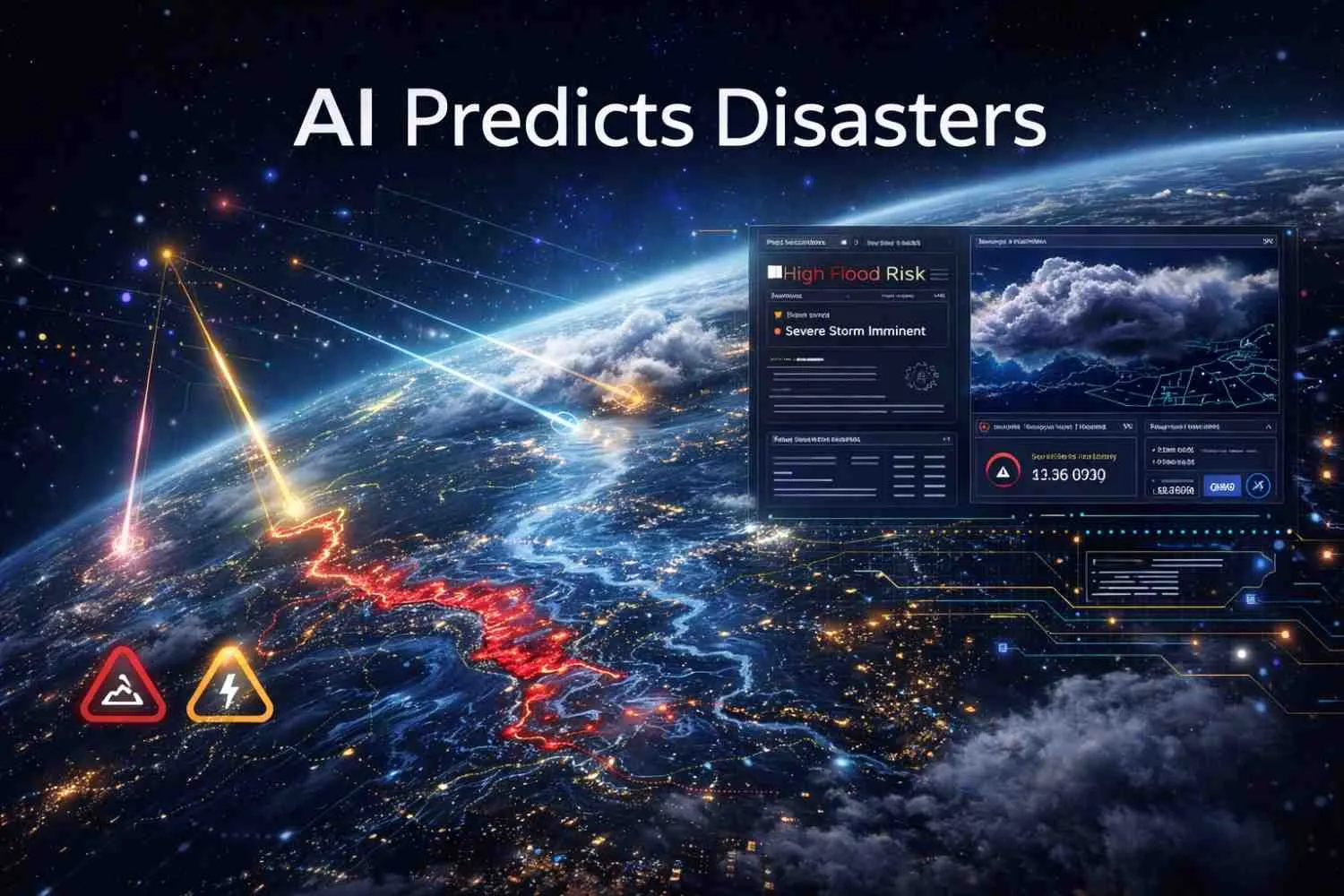
Artificial intelligence is becoming more utilised for solving problems in the real-world as well as automating business activities and productivity. The Google team has developed a new methodology named Groundsource, which uses AI to predict disasters.
Natural disasters such as floods, landslides, and heat waves typically happen with very little warning, causing communities to be unprepared when these types of events occur. One of the challenges with predicting natural disasters is the availability of quality data. This lack of data for natural disasters creates difficulty for the computer algorithm that is trying to predict the events.
This blog helps you understand how Groundsource AI can predict floods and the broader impact of AI in disaster prediction. Let’s dive in!
Also Read: Claude Hits #1 on the App Store: Is ChatGPT Losing Its Lead in the AI Race?
How Groundsource Uses AI to Predict Flash Floods
Groundsource will solve the above-described challenges by using AI to convert publicly available data from different sources into structured datasets to help make better predictions of natural disasters in the future.
By leveraging data from public reports, news articles, and historical documentation on natural disasters using the Gemini AI computer model, Groundsource is able to identify over 2.6 million historical flooding events from 150+ countries over multiple decades of data.
To further improve the geographical accuracy of these historical flooding events, the data was incorporated into the Google Maps dataset, thus allowing for accurate identification of flooding event locations and boundaries.
Using this new dataset, researchers can develop machine learning prediction models for urban flash floods that allow them to make accurate predictions up to 24 hours before a flash flood.
Integration with Google’s Flood Hub
Google Flood Hub provides river flood forecasts to over 2 billion people in 150 countries. It will expand the ability to help prepare communities for disaster by adding predictions for urban flash floods.
These forecasts are intended to support local governments, emergency responders, and disaster management agencies by offering them pre-evacuation warnings regarding vulnerable neighbourhoods. Using combined predictive data, cities can devise long-term resiliency plans, such as installing better drainage systems, building flood-resistant infrastructure, and implementing innovative techniques for flood-prone municipalities.
Also Read: Perplexity AI Updates in March 2026: New Features, Partnerships, and What They Mean for AI Search
The Future of AI in Disaster Prediction and Climate Resilience
Projects like Groundsource demonstrate how AI can help build resilience on a global scale. AI can also save lives by enhancing early warning systems and improving disaster preparedness. Machine learning will continue to improve over the coming decade, and combining public data, geospatial information, and real-time forecasts may become one of the most significant applications of AI.
The right tool at the right place can create a huge impact!
Frequently Asked Questions:
1. What Is Groundsource?
Groundsource is a Google-developed, AI-based methodology that turns official disaster reports into structured datasets to help improve the prediction of future disasters.
2. What problem does groundsource address?
Groundsource resolves the issue of having low-quality historical data available to train predictive AI models for predicting natural disasters such as flash floods.
3. How many flood events did Groundsource analyze?
Groundsource identified over 2.6 million flood events worldwide within 150 countries.
4. How accurate are flash flood predictions with this system?
Currently, existing models for predicting urban flash floods can predict them with up to 24 hours of advance notice, thereby allowing communities to prepare earlier.
5. Where are these predictions available?
They can be accessed through the Google Flood Hub globally.
6. Can this be used for other natural disasters?
Yes, researchers anticipate that this technology could potentially also be applied to predicting landslides and heat waves, in addition to other natural disasters.
Never miss a story
Stay updated about BeGig news as it happens