Published: Fri - Aug 07, 2026
LinkedIn vs Upwork for Freelance Developers: Which Actually Gets You Hired in 2026?


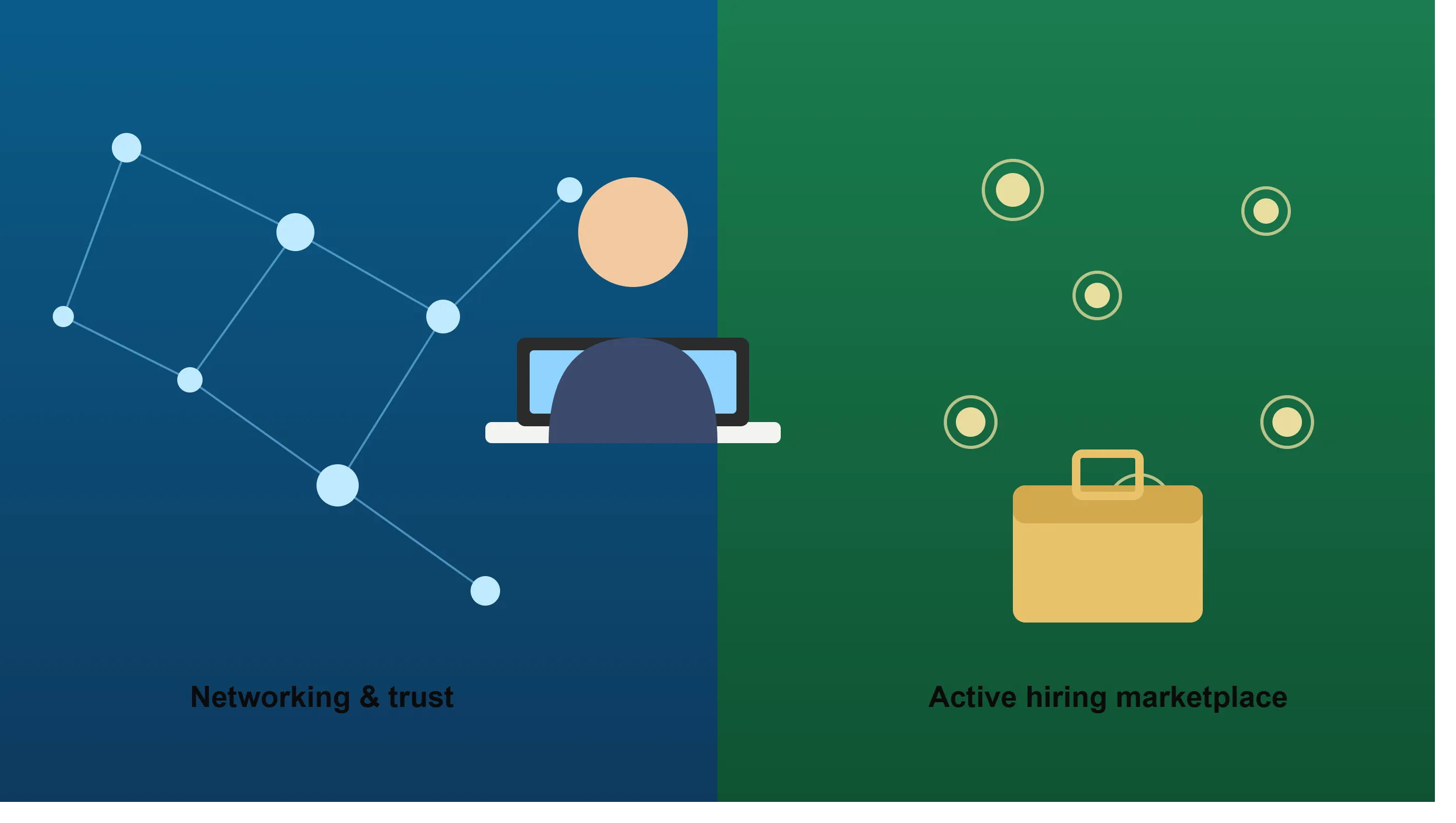
When it comes to choosing the right platform to find paying customers, most freelance developers are at the mercy of chance, tossing a coin between LinkedIn and Upwork in hopes of one delivering a steady stream of project invites.
It shouldn’t be this way, since the truth is actually apparent to anyone who looks at the available data. The graph below shows the relevant trends for 2025 and 2026, and understanding what it represents may help freelance developers make a more informed decision.
Quick Answer
While Upwork is the platform of choice for developers who want to get hired right away, LinkedIn gets you better paid clients. Most successful freelance developers in 2026 tend to use both, relying on Upwork to get the first clients and LinkedIn get hired for more lucrative assignments.
Why This Question Matters More in 2026
The freelance economy continues to boom year after year. Upwork alone has over 18 million registered freelancers from over 180 countries and facilitates over 4 billion$ in payments annually.
Meanwhile, the LinkedIn Services Marketplace enjoys a solid user base of around 10 million people, with the traffic growing by a staggering 48% per annum YoY . The number of service requests is up by 65% year over year on the platform. Combined with the explosive popularity of Upwork, it makes the competition extremely fierce for freelance developers, especially those just getting started.
Upwork: The Platform Built for Active Buyers
Think of Upwork like a busy farmers market. People walk in already hungry, wallet in hand, ready to buy. That is the biggest advantage of the platform. Nobody browses Upwork "just for fun." Every client posting a job is there because they need something done, and often soon.
Here is what the 2025-26 numbers show about earning on Upwork:
- The average hourly rate for freelancers is close to $39 per hour, with most professionals landing somewhere between $29 and $54.
- Web developers specifically see a wide range, from around $13 up to $324 per hour, depending on skill level and specialization.
- Entry-level and administrative work usually starts around $10 to $20 per hour, while advanced development, AI work, and consulting often reach $100 or more per hour.
- Web, mobile, and software development make up the single largest category on the platform, accounting for roughly 34% of all activity.
- Active clients numbered close to 794,000 to 841,000 through late 2025, so demand is steady, not shrinking.
That last point matters a lot. A platform only works for freelancers if buyers keep showing up, and Upwork's client numbers stayed strong even as the freelance market shifted around it.
But there is a catch, and it is a big one. The market is splitting into two very different lanes. Generalist developers, the ones who list a broad skill set and hope for the best, are feeling real pressure on their rates. Meanwhile, specialists, especially those working with AI systems, machine learning, or a specific tech stack, are pulling in premium pay. Senior AI developers on freelance platforms now bill between $200 and $300 per hour in many cases. The lesson is simple. A sharp, specific profile beats a broad one almost every time now.
LinkedIn: The Platform Built for Long-Term Trust
LinkedIn plays a completely different game. Nobody logs in planning to hire a freelancer today. They log in to network, read industry posts, or check who got promoted. Freelance hiring happens almost by accident, through conversations, comments, and content, rather than through active searching.
That sounds like a weakness, and in some ways it is. Only about 67% of freelancers even know the Services Marketplace feature exists, and awareness among clients is lower still. Since LinkedIn's main business is recruiting full-time employees, the freelance marketplace tool gets far less attention, development, and promotion inside the company.
Yet LinkedIn has one huge strength that Upwork cannot copy: trust that builds over time. When a client finds you through a LinkedIn post, a shared connection, or years of visible expertise, they already trust you before the first message is sent. There is no bidding war. There is no race to the bottom on price. And there is no platform fee cutting into your rate, since LinkedIn does not take a commission on deals made through networking.
This is exactly why direct clients found through platforms like LinkedIn tend to pay 30% to 50% more than clients found through commission-based marketplaces. The freelancer keeps the full rate, and the client is often less price-sensitive because they already believe in the freelancer's expertise.
The tradeoff is time. Building this kind of presence rarely happens overnight. Most freelancers report it takes somewhere between 6 and 12 months to build a pipeline of clients that shows up on its own, without constant chasing.
Side-by-Side Snapshot (2025-26 Data)
Upwork, in a nutshell: Hiring intent is high, since clients arrive already ready to hire. The average developer rate sits near $39 per hour, though specialists can push past $324 per hour. Freelancers pay around a 10% service fee. A first paid job can land within days or a few weeks. It works best for fast, steady project income, though competition stays high with many freelancers bidding on the same posts.
LinkedIn, in a nutshell: Hiring intent is low, and most opportunities come through passive discovery rather than active searching. There is no fixed rate, but direct deals often pay 30% to 50% more than marketplace work. There is no platform fee on relationships built through networking. A first paid job usually takes much longer, often somewhere between 6 and 12 months. It works best for high-trust, high-paying repeat clients, and direct competition stays low, though so does visibility.
The Real Trend: Freelancers Are Not Choosing One Anymore
Here is something worth noticing. Freelancers who only rely on one platform are taking on more risk than they realize. Community discussions from freelancers on Upwork often mention shrinking margins and sudden algorithm changes that bury a profile overnight, seemingly without warning. That kind of instability pushes smart freelancers to spread their presence across more than one channel.
Developers now treat platform diversification the same way investors treat a stock portfolio. Upwork covers short-term cash flow. LinkedIn builds a name that eventually reduces how much a freelancer even needs Upwork. Some also add niche platforms like Toptal or Braintrust into the mix for higher-end, pre-vetted opportunities, though acceptance rates on sites like Toptal remain extremely selective, often below 3%.
The freelance economy overall is not slowing down either. Businesses are leaning into it harder than before, with 78% of companies planning to bring on independent talent in the next few months, according to recent hiring surveys. That demand is exactly why picking the right platform strategy, instead of just picking one platform, matters so much right now.
Frequently Asked Questions
Which one is better for a new freelance developer?
Upwork is the clear favorite, due to its active buyer base and the ability to get the first clients quickly.
Can I actually get hired as a developer on LinkedIn?
Yes, but the process is gradual.
What is the average hourly rate for developers on freelance platforms in 2026?
The average developer hourly rate on Upwork in 2026 is around $$39 per hour, though specialized developers, especially those working in AI, often charge $100 per hour, while rates for more specialized assignments, such as AI or machine learning development, may exceed $300 per hour.
Do I need a LinkedIn Services Marketplace listing to get hired?
No – in most cases, the direct outreach works much better. Only a small minority of hiring decisions are attributed to the LinkedIn Services Marketplace, so you should treat the profile as another tool for content marketing and networking.
Should I be using both LinkedIn and Upwork?
Yes. the best strategy in 2026 is to use both platforms. Using Upwork allows a new freelance developer to build a steady income, while LinkedIn and Begig can be used to build long-term relationships that will lead to better paid work in the future.
The Bottom Line
There is no single winner here, and pretending otherwise would be misleading. Upwork gets you hired faster. LinkedIn gets you hired better, eventually. The smartest move for most freelance developers in 2026 is not picking a side. It is using Upwork to stay booked while using LinkedIn to quietly build the kind of reputation that one day makes bidding for jobs unnecessary altogether.
This is exactly the gap Begig was built to close. Instead of forcing developers to choose between fast, commission-heavy gigs on one side and slow, passive networking on the other, Begig brings active hiring intent and direct, trust-based connections into one place. Clients on Begig come looking to hire, the same way they do on Upwork, but without the crowded bidding wars or the rate-eroding fees that quietly shrink a freelancer's paycheck. Profiles are built around real skills and real work, not just endless proposals, so a developer's expertise does the talking instead of the lowest bid winning the job.
For freelance developers who are tired of splitting their energy between two platforms that each solve only half the problem, Begig is designed to offer both halves at once: the speed of a real marketplace and the trust of a direct relationship. That means less time chasing gigs and more time getting hired for the value you actually bring.
Never miss a story
Stay updated about BeGig news as it happens