Published: Tue - Feb 03, 2026
How to Verify a Client Before Freelancing and Avoid Payment Issues


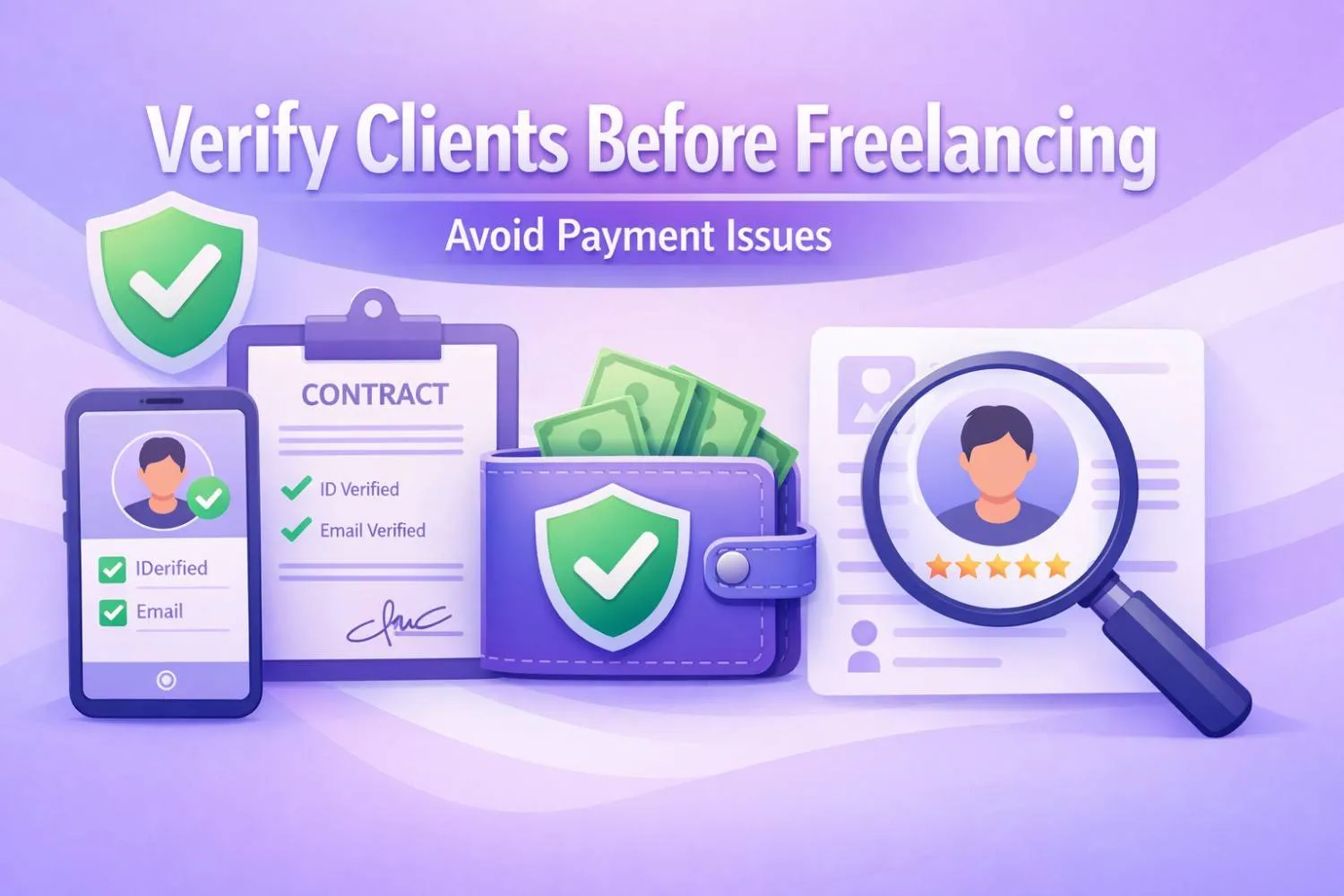
Freelancing comes with flexibility, global exposure, and high-paying opportunities, but also a risk of working with the wrong client. Most beginners face delays in payment, unclear scopes of the project, or even scams, simply because they do not verify client before freelancing for a project.
If you are a beginner freelancer looking for good and legitimate freelancing opportunities in 2026, read our latest blog on “How to Find High-Paying Freelance Jobs Online in 2026”.
With remote work growing at a rapid pace across both the Indian and global markets, issues regarding freelance contract safety have also increased. Reports of high-profile, fake job setups and gig-work risks reveal reasons why freelancers have to be extra cautious before starting any project.
In this guide, you'll learn how to verify a client before freelancing for them, know the signs of a problematic project when it's still early, and protect yourself with a strong freelance contract.
Freelance Client Red Flags You Should Never Ignore
Not every client is trying to scam you, but the minute you start ignoring warning signs, major problems arise later. Here are some of the most typical freelance client red flags you should look out for:
- Unrealistic Deadlines With Low Budgets
If a client demands enterprise-level work within a few days, offering extremely low pay, it may signal poor planning or potential payment issues.
- Requests to Move Communication Off Platform
Most freelance work scams start when clients ask you to shift conversations to unofficial channels right away. Verified platforms are there for a reason: they protect both parties.
- Red Flag: No Clear Scope of the Project
The client should be able to explain the deliverables, timelines, and the process in the beginning. Fuzzy descriptions, such as “we shall figure it out later,” might lead to fraud or disputes.
- Refusal to Sign Contracts or Milestones
Real clients typically sign written contracts. Avoid projects that do not have a clear, well-written contract.
Freelance Contract Safety Checklist
It is always a good decision to have an agreement before any project begins. This helps protect the freelancer as well as the client. Check out this freelance safety checklist before accepting any client:
1. Define Scope of Work
Clearly define tasks involved, changes, products to be delivered, and deadlines.
2. Set Payment Milestones
Instead of receiving full payment at the end of each job, break the projects down into phases. Milestones provide for regular cash flow and accountability.
3. Clarify Ownership & Rights
State who owns the final work after payment. This is particularly essential for developers, designers, and experts in AI.
4. Include Communication Rules
Decide where discussions should occur, such as email, platform chat, or project tools, to keep records.
5. Add Exit Terms
The professional contract includes clauses for cancellations in case the project takes another direction.
6. Freelance Contract Safety
Likewise, contracts are not just about safety, but they also help build trust and professionalism in freelance work relationships.
Work With Confidence: Choose Verified Clients Only
One of the smartest ways to avoid payment issues is to reduce the risk at its very source, by choosing verified clients instead of random job postings. Curated platforms are preferred by many freelancers today because:
- The clients are screened before posting projects.
- Payments are secured through structured workflows
- Project expectations are clearly defined from the outset.
In other words, it is platforms like BeGig that assist in bringing freelancers together with verified tech clients, thus leaving zero chance of freelance contract red flags or late payment. You instead focus on quality projects that match your expertise without wasting your time behind unfaithful leads. Working with verified ecosystems doesn’t just protect your income; it also helps you build long-term professional relationships.
Frequently Asked Questions (FAQs):
1. How do I validate a client before freelancing?
Check their presence online, reviews, previous projects, and whether they agree to a contract or milestone payments.
2. What are the biggest freelance client red flags?
Unclear scope, refusal to sign contracts, pressure for unpaid test work, and requests to move off secure platforms.
3. Is a freelance contract required even for a small job?
Yes. Written agreements for even small projects can help avoid future conflicts.
4. What is Freelance Contract Safety?
It is a method of using a contract and agreement that defines payments and deliverables.
5. How do verified platforms help freelancers?
They can also be used to minimize risk by screening clients.
Never miss a story
Stay updated about BeGig news as it happens